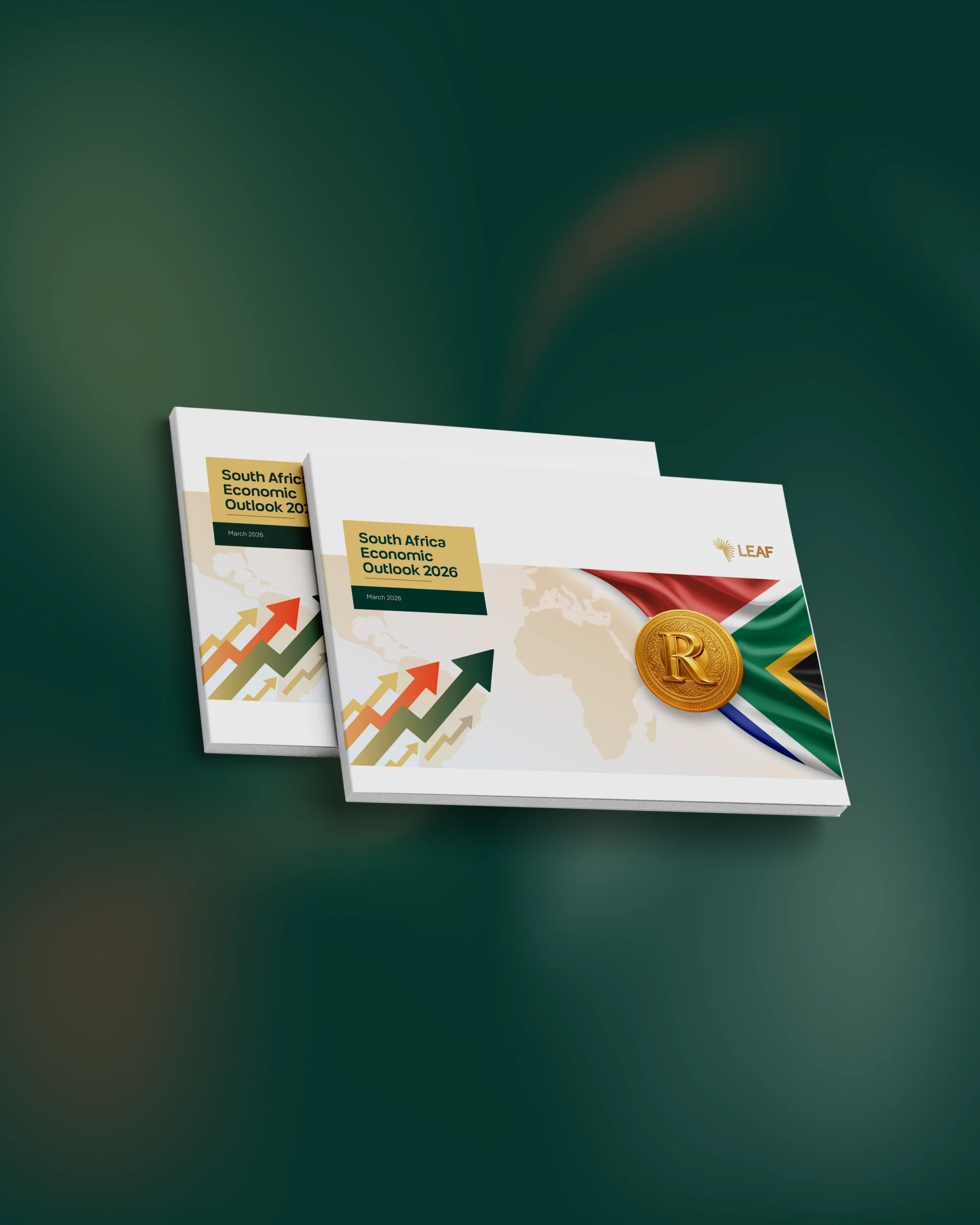
Economic Outlook 2026
South Africa Economic Outlook 2026
South Africa's 2026 outlook is a reform-execution story. Recovery is possible, but growth remains capped by energy, logistics, fiscal pressure, and weak investment confidence.
A country-focused outlook on South Africa's next economic cycle.
South Africa's outlook is not about whether the economy can grow. It is about whether reform can move growth from fragile stabilisation to durable expansion. The numbers show a country with institutional strengths and financial depth, but with urgent pressure around power, logistics, debt, and investor confidence.
The outlook turns on whether reform can unlock durable expansion.
Recovery is possible, but still capped.
Growth is improving, but the baseline remains too weak to meaningfully change employment, fiscal, and investment outcomes without stronger reform execution.
Debt, power, and logistics shape confidence.
South Africa's macro story is shaped by whether energy reliability, logistics reform, debt discipline, and investor confidence improve together.
Essential signals from the South Africa outlook.
Use these cards to track reform delivery, growth constraints, and the pressure points shaping South Africa's 2026 economy.
Growth Ceiling
1.4%South Africa's economy is projected to grow by 1.4% in 2026, pointing to stabilisation but not yet a strong recovery.
Decision signal: growth is improving, but still below the level needed to meaningfully change employment, fiscal, and investment outcomes.Reform Upside
2.8%In an optimistic reform scenario, growth could rise to 2.8% if energy, logistics, and policy credibility improve.
Decision signal: reform execution is the difference between low-growth drift and a more investable macro story.Debt Pressure
76%-77%Public debt is hovering around 76%-77% of GDP, keeping fiscal space narrow and leaving less room for productive investment.
Decision signal: debt discipline directly shapes infrastructure spending, risk pricing, and policy flexibility.Interest Burden
R385BDebt-service costs have reached about R385 billion, absorbing roughly 19% of government revenue.
Decision signal: interest payments crowd out energy, logistics, infrastructure, and growth-supporting investment.Power Risk
1-2ppSevere electricity shortages can reduce annual GDP growth by 1-2 percentage points, making energy reform central to the outlook.
Decision signal: load shedding is not just operational disruption; it is a macroeconomic growth constraint.Banking Buffer
8%-9%Banking-sector credit growth is forecast at 8%-9% in 2026, with banks positioned to support recovery if confidence improves.
Decision signal: financial depth exists, but real growth depends on credit flowing into productive activity.Inflation Relief
3.3%-3.6%Headline inflation is expected to average 3.3%-3.6% in 2025, giving the economy some relief after cost pressures.
Decision signal: lower inflation creates room for rate support, but food, fuel, logistics, and energy remain price channels.Downside Debt Risk
85%In a weaker scenario, public debt could approach 85% of GDP while growth slows and fiscal pressure deepens.
Decision signal: the risk is low growth combined with rising debt and weaker investor confidence.For people making decisions around South Africa's economy.
- Investors assessing macro risk, sectors, and market confidence.
- Operators planning around demand, production, infrastructure, and cost pressure.
- Policy teams and researchers tracking reform, growth, and resilience.
- Analysts comparing South Africa's role in Africa's wider growth story.
Get the full South Africa Economic Outlook 2026 report.
Use the form above to access the complete publication and explore the full outlook, analysis, and risk framing.
Download Full Report