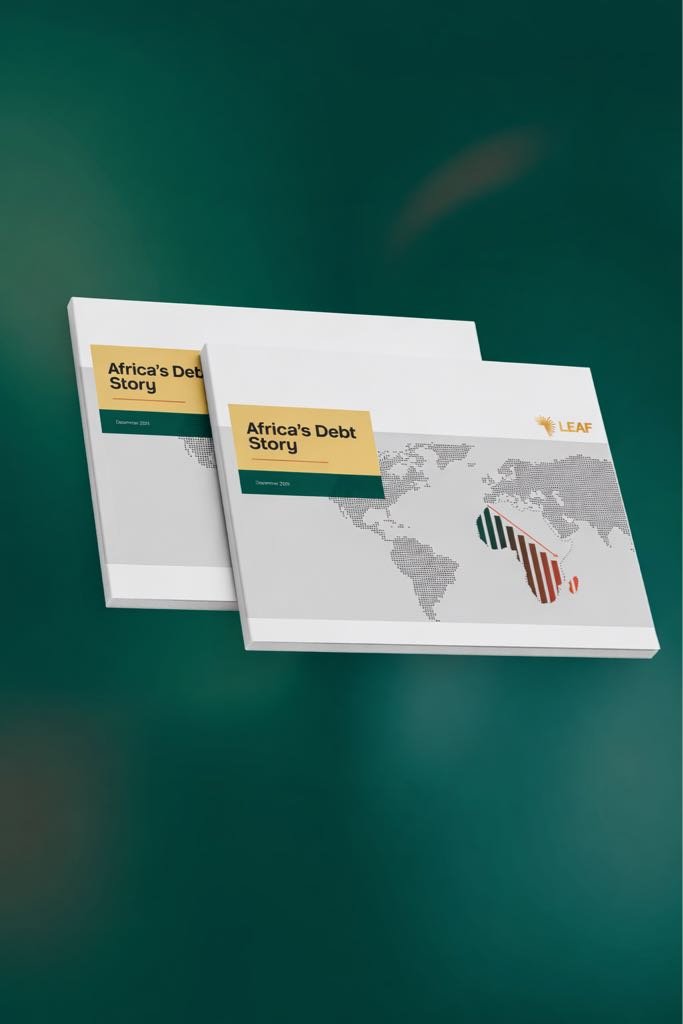
Africa Debt Story Report

Africa Debt Story Report

A strategic look at Africa's debt, its cost, its creditors, and what it means for the continent's economic future.

Africa's debt story is not just about how much the continent owes. It is about who holds the debt, how expensive repayment has become, how debt pressure affects public spending, and what decision-makers must understand as fiscal risks deepen across the region.

Understand who holds Africa's debt and why creditor structure matters. Track debt-service pressure, fiscal strain, and debt-to-GDP risks. Use investor-grade insight to separate debt headlines from debt reality.
Africa Debt Story Report cover
Report Focus

A strategic view of Africa's debt reality beyond crisis headlines.

The Africa Debt Story Report provides a data-driven view of Africa's debt landscape, from the rise in public debt and the shift in creditor structures to the burden of debt servicing and the long-term implications for growth, investment, entrepreneurs, and public welfare.

A flagship LEAF report built to help investors, policymakers, operators, researchers, and ecosystem leaders understand Africa's debt reality beyond surface-level crisis narratives.

Focus Sovereign debt, fiscal sustainability, creditor structure, debt-service pressure, and long-term economic consequence.
Built For Investors, policymakers, researchers, operators, entrepreneurs, development partners, and ecosystem leaders.
Value Clearer context for understanding Africa's debt risks, financing constraints, creditor relationships, and reform opportunities.
Why It Matters

Africa's debt story is more complex than the headlines suggest.

The issue is not only debt size.

Debt is often discussed as a crisis signal, but the deeper issue is whether debt is productive, affordable, sustainable, and structured in a way that strengthens long-term growth.

Repayment pressure is reshaping public choices.

Many African countries borrow under more expensive conditions, face weaker currencies, depend heavily on external financing, and must service debt while still funding infrastructure, health, education, and economic development.

Data For Decision-Makers

Essential signals from the Africa Debt Story Report.

Use these cards to track fiscal pressure, creditor exposure, and the debt forces shaping African economies.

01

Global Debt

$102T

Global public debt reached $102 trillion in 2024, equivalent to 93% of global GDP.

Decision signal: the world is operating in an era of historically elevated sovereign borrowing.
02

Africa's Public Debt

$1.83T

Africa's public debt rose from $510 billion in 2008 to $1.83 trillion in 2024.

Decision signal: the continent's public debt increased by 253% over sixteen years.
03

Debt Concentration

72%

About 72% of Africa's debt is owed by ten countries, including Egypt, South Africa, Algeria, Morocco, Nigeria, Kenya, Sudan, Angola, Ghana, and Cote d'Ivoire.

Decision signal: Africa's debt exposure is concentrated across a relatively small group of economies.
04

Debt Exposure

23 countries

In 2024, 23 African countries had debt-to-GDP ratios above the 60% sustainability threshold.

Decision signal: fiscal pressure is elevated across a significant part of the continent.
05

External Debt Pressure

186.6%

Africa's external debt reached 186.6% of export earnings in 2024.

Decision signal: the continent owes almost two dollars externally for every dollar earned from exports.
06

Debt Service

$102.6B

Africa's external debt-service cost rose to $102.6 billion in 2024, more than tripling over the past decade.

Decision signal: repayment costs are increasing pressure on public finances.
07

Revenue Pressure

18.31%

Africa now allocates about 18.31% of government revenue to public debt interest payments.

Decision signal: the continent is in a high debt-pressure zone.
08

Creditor Shift

$746B

Africa's external public debt held by major creditor groups rose from $208 billion in 2008 to $746 billion in 2023.

Decision signal: who finances Africa has changed significantly.
09

Bondholder Exposure

$186B

Bondholders became Africa's largest external creditor group in 2023, holding $186 billion, up from $25 billion in 2008.

Decision signal: market-based borrowing now plays a much larger role in Africa's debt profile.
Inside The Report

What readers will gain.

Structured analysis across debt growth, creditor shifts, debt-service burden, private-sector effects, and financing pathways.

Debt structure and creditor power.

Understand who holds Africa's debt, including the growing role of bondholders, multilateral lenders, China, and other creditor groups.

Debt-service burden.

See how rising repayment costs reduce fiscal space and divert public resources away from health, education, infrastructure, and development.

Entrepreneurial impact.

Track how sovereign debt pressure can affect private-sector lending, investment appetite, currency stability, startup financing, and business costs.

Risks and opportunities.

Explore currency risk, the debt trap loop, sustainability-linked bonds, diaspora bonds, local-currency borrowing, and emerging financing pathways.

Who Should Read It

For people making serious decisions around Africa's debt future.

  • Investors assessing sovereign risk, macro stability, capital flows, and country exposure.
  • Policymakers thinking through debt sustainability, fiscal choices, creditor strategy, and financing reform.
  • Researchers and analysts seeking structured insight into Africa's debt evolution and creditor landscape.
  • Entrepreneurs and operators tracking how macro pressure affects capital access, lending costs, currency risk, and business confidence.
  • Development partners evaluating fiscal vulnerability, debt restructuring, concessional financing, and long-term development resilience.
  • Media and ecosystem leaders looking for clearer context on one of Africa's most important economic conversations.
Featured Insight

Debt is not automatically bad. Poorly structured debt is.

The real test is whether borrowed money creates productive value. If debt builds infrastructure, expands industrial capacity, strengthens public services, and unlocks private-sector growth, it can support transformation.

But if repayment costs rise faster than revenues, if debt is exposed to currency shocks, or if borrowed funds fail to generate growth, debt becomes a constraint on the future.

Download The Report

Access the full Africa Debt Story Report.

Get the full report and explore Africa's public debt growth, creditor relationships, repayment pressure, debt-service risks, and emerging financing opportunities.

Download Full Report