
 Economic Outlook 2026
Nigeria Economic Outlook 2026
Nigeria's 2026 outlook is a stability-first recovery. Macro signals are improving, but inflation, credit tightness, oil dependence, and fiscal pressure still prevent broad-based relief.
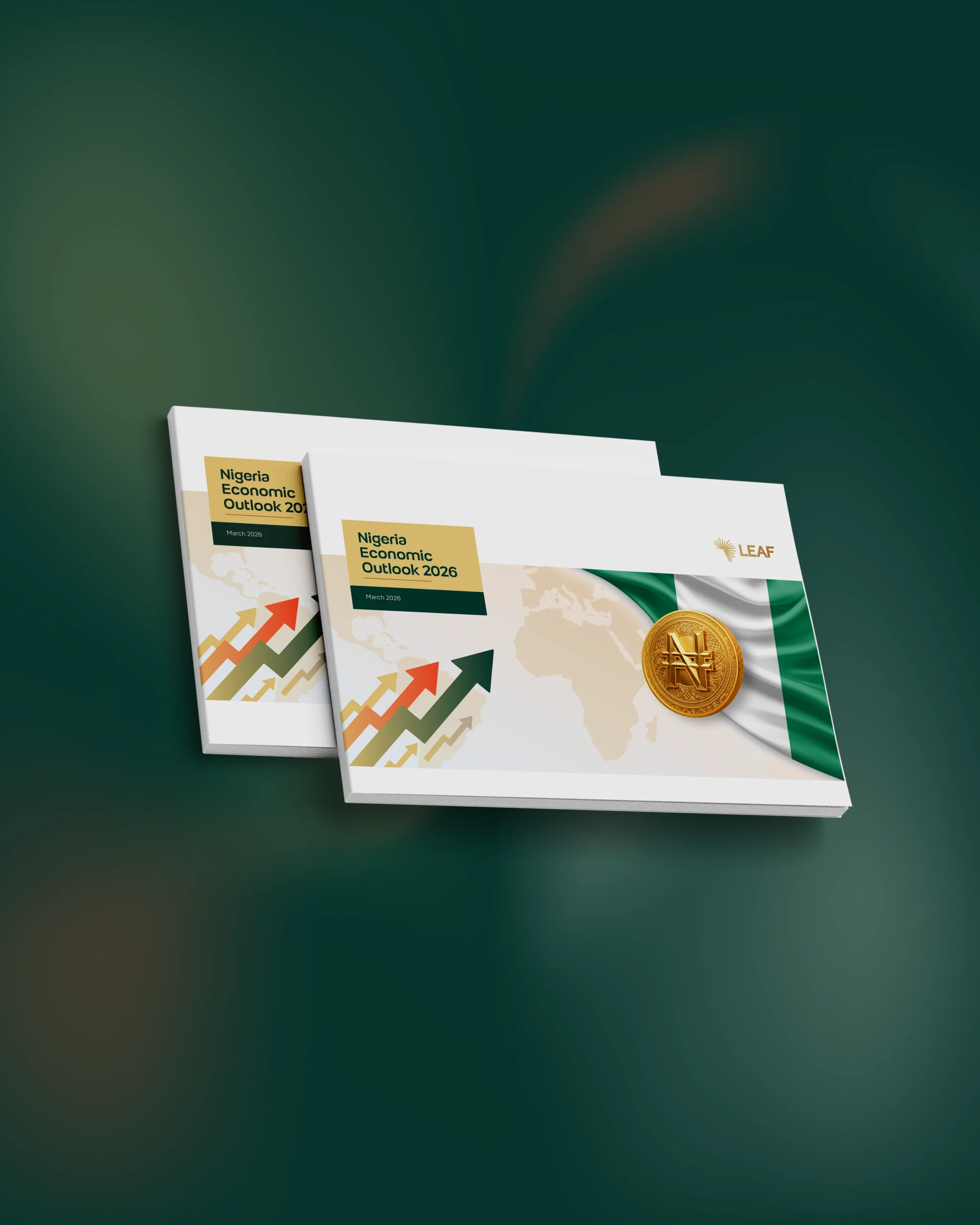
A sharper view of Nigeria's risk, resilience, and reform story.
Nigeria's economy is moving from disruption toward stabilisation. The challenge is that better macro signals have not yet translated into broad relief for households and firms. The data points to meaningful upside if reforms strengthen FX liquidity, inflation credibility, oil-sector reliability, and fiscal discipline.
Nigeria's outlook is a recovery story, but stability still comes first.
Better signals do not yet mean broad relief.
Growth is improving, but inflation, tight credit, FX liquidity, and fiscal pressure still affect purchasing power, margins, borrowing conditions, and confidence.
Buffers and credibility matter.
Nigeria's 2026 path depends on stronger reserves, oil-sector reliability, policy consistency, and a more credible inflation and FX environment.
Essential signals from the Nigeria outlook.
Use these cards to track macro stability, recovery quality, and the pressure points shaping Nigeria's 2026 economy.
Stability Growth
4.2%Nigeria's real GDP is forecast to grow by 4.2% in 2026, reflecting cautious recovery after years of macroeconomic disruption.
Decision signal: growth is improving, but the main task is still repair: credibility, buffers, inflation control, and FX stability.Inflation Pressure
23.8%Inflation is projected at 23.8% in 2026, meaning price pressure remains a defining constraint on households and businesses.
Decision signal: even when inflation moderates, the level remains high enough to affect purchasing power, margins, and lending conditions.Policy Rate Signal
26.67%The Monetary Policy Rate is projected to moderate to 26.67%, but credit conditions remain tight.
Decision signal: stabilisation is not yet the same as relief; borrowing costs are still a major constraint on firms.Reserve Buffer
$51.04BNigeria's foreign reserves are projected to rise from $45.50 billion in 2025 to $51.04 billion in 2026.
Decision signal: stronger reserves improve confidence, external-payment capacity, and policy flexibility.Oil Production Anchor
1.48M bpdCrude production is expected to average 1.48 million barrels per day in 2026, making output stability central to FX and fiscal performance.
Decision signal: in a softer oil-price environment, stability depends more on production reliability than price windfalls.Non-Oil Engine
97.13%The non-oil economy accounted for about 97.13% of GDP in Q4 2025, showing where Nigeria's real growth base is concentrated.
Decision signal: output is less oil-led, but FX and fiscal strength still depend heavily on oil performance.Services Anchor
55.92%Services contributed 55.92% of output in Q4 2025, making it the dominant engine of domestic activity.
Decision signal: resilience is coming from services, trade, telecoms, and domestic activity rather than deep industrial transformation.Credit Depth Gap
12.2%Domestic credit to the private sector stood at 12.2% of GDP in 2025, signalling limited financial depth for business expansion.
Decision signal: stronger private-sector growth depends on better credit transmission and lower-risk lending conditions.For people making decisions around Nigeria's economy.
- Investors assessing macro risk, reserves, policy direction, and sector exposure.
- Operators planning around inflation, demand, input costs, and currency pressure.
- Policy teams and researchers tracking reform, fiscal capacity, and growth resilience.
- Analysts comparing Nigeria's role in Africa's wider economic outlook.
Get the full Nigeria Economic Outlook 2026 report.
Use the form above to access the complete publication and explore the full outlook, analysis, and risk framing.
Download Full Report