

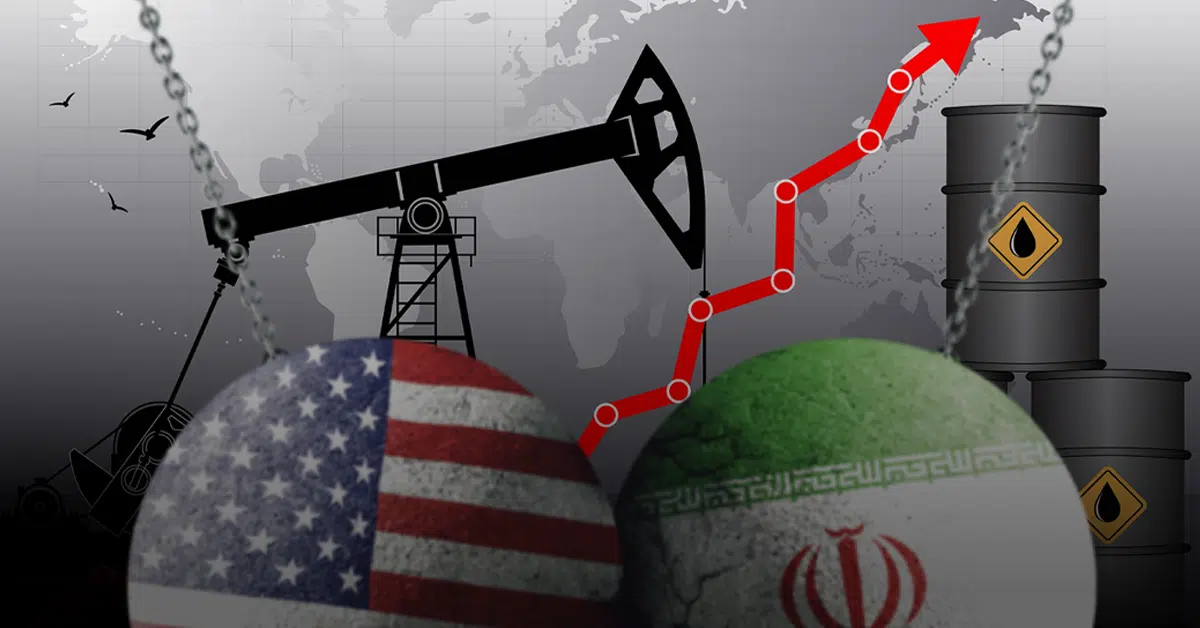
The US–Israel–Iran conflict has triggered a major shock in global energy markets, with prices rising sharply following disruptions to the Strait of Hormuz. This key oil transit route handles over one-fifth of global supply, according to the U.S. Energy Information Administration (2025). The disruption to this trade route has increased global demand and pushed oil prices upward, currently at $114 at the time of writing. For Africa, the impact is immediate, as higher global oil prices translate into higher fuel costs, transport expenses, and inflationary pressure on households and businesses.
Why Africa Is So Exposed to Fuel Shocks
Africa is particularly vulnerable to such shocks due to its heavy reliance on imported refined petroleum products, even in oil-producing countries with limited refining capacity. Fuel markets are therefore driven by global oil prices, freight costs, exchange rates, and supply disruptions rather than local conditions. As prices rise, the effects quickly transmit through transport costs, soaring food prices, business expenses, and overall inflation.
Fuel Price Trends Across African Markets
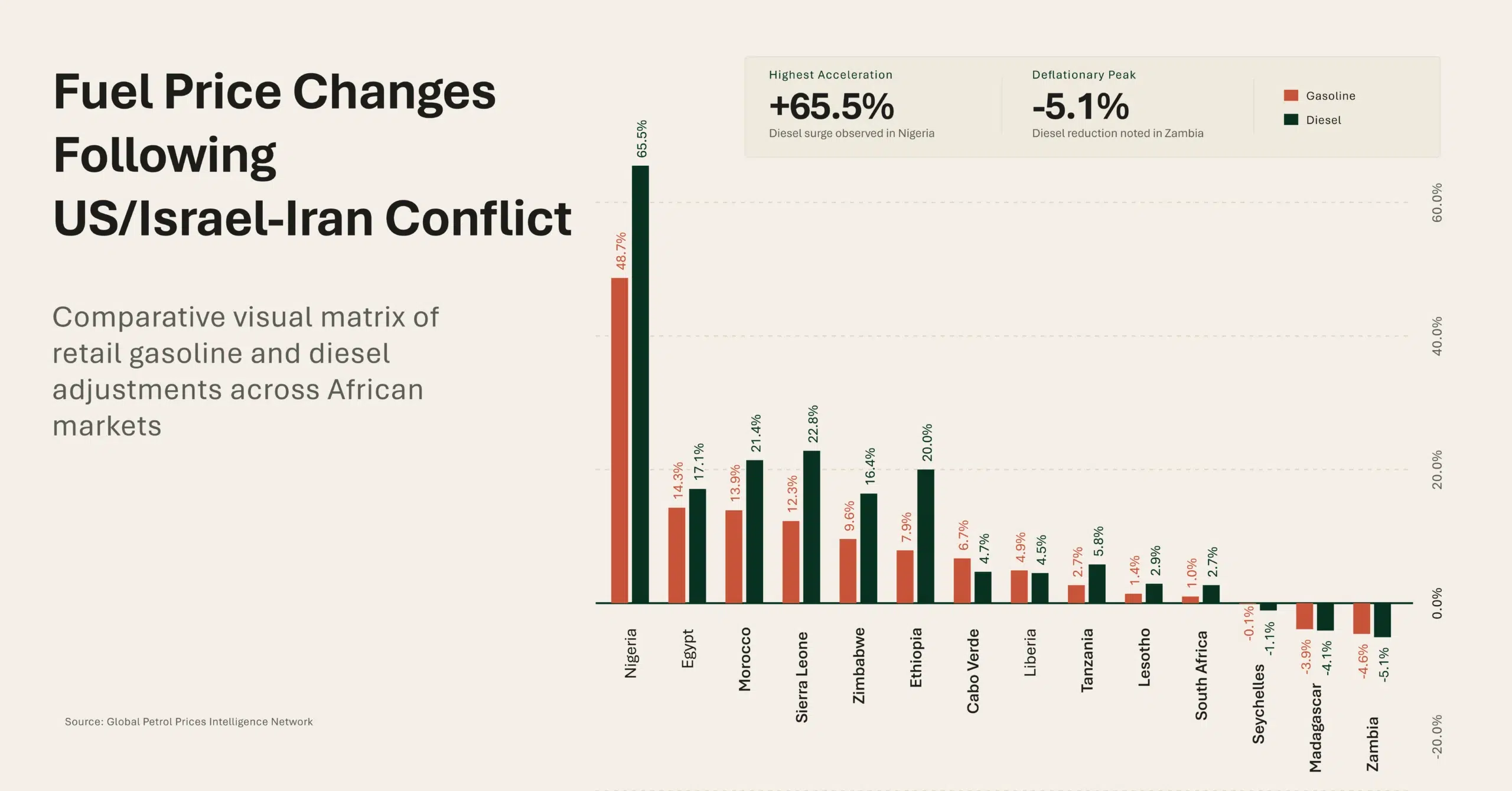
Fuel price data across African economies show an uneven pass-through of the shock, with some recording sharp increases, others declines, and many no change. This variation reflects the role of domestic pricing systems, subsidies, exchange rates, taxes, and adjustment timing, not just global pressures. Between Feb 23 and Mar 16, 2026, Nigeria recorded the largest increases (gasoline +48.7%, diesel +65.5%), while countries like Egypt, Morocco, Sierra Leone, Zimbabwe, and Ethiopia also saw notable rises, with diesel often increasing faster; meanwhile, Zambia, Madagascar, and Seychelles recorded declines, and Algeria, Angola, and Benin saw no change.
Economic Implications Across Key African Economies
Nigeria: The Sharpest Price Adjustment
Nigeria illustrates how exposed African fuel markets remain, recording the largest price increase despite being an oil producer with expanding refining capacity. The reason is that local supply shortages and constraints on crude supply to the domestic refinery (Dangote refinery) have limited the domestic refining's ability to fully buffer the market. This shows that refining alone does not shield economies from global shocks, especially with subsidy removal allowing prices to adjust more directly to international conditions. The result is rapid transmission into higher transport costs, rising food prices, increased business expenses, and pressure on household incomes.
Egypt: Fiscal Absorption Instead of Full Pass-Through
Egypt also recorded a strong increase, but with a different transmission pattern due to price controls and subsidies that absorb part of the shock. This reduces immediate pressure on consumers but shifts the burden to the public budget. With existing debt and foreign exchange constraints, higher oil costs add to fiscal strain and imported inflation.
Morocco and South Africa: Different Systems, Different Outcomes
Energy prices in Morocco recorded a moderate increase, reflecting its reliance on imported energy and greater exposure to global oil prices as subsidies have declined, leading to higher logistics costs and inflation risks. Prices in the South African economy have increased only slightly due to a regulated pricing system that adjusts prices more gradually in response to global factors and exchange rates. While this stabilises movements, even small increases still impact transport, mining, and food distribution costs.
South Africa: Fuel Pricing System Absorbs Global Shocks
South Africa recorded a minor fuel price increase, reflecting its structured pricing system. Prices are adjusted monthly based on international benchmarks, exchange rates, and regulated components, with petrol regulated at retail and diesel guided by wholesale reference prices. While this moderates volatility, even small price changes still have economic effects.
Implications:
- Fuel costs feed directly into freight and commuting costs
- It feeds directly into mining operations
- Fuel costs affect food distribution.
Seychelles: High Prices, But a Slight Decline
Seychelles, a small island economy with already high fuel prices, recorded a slight decline due to a pricing mechanism that adjusts prices in both directions to international costs. Despite this temporary relief, baseline prices remain high, keeping transport, tourism, utilities, and living costs highly sensitive to external energy shocks.
What This Means for Investors
This episode shows that Africa’s fuel challenges extend beyond crude oil supply to refining, storage, distribution, and policy frameworks that influence how global price shocks affect local markets. Investment opportunities exist in underdeveloped refining, storage, and logistics infrastructure, as well as in diesel-dependent sectors like transport, agriculture, mining, manufacturing, and backup power. However, investors should prioritise markets with credible pricing, stable foreign exchange access, and robust regulatory systems to manage volatility effectively.
What Policymakers Should Do Next
Policymakers should prioritise a practical fuel-market resilience strategy built on four actions. First, expand domestic refining, storage, and distribution capacity to reduce dependence on imports and improve supply security. Second, replace broad fuel subsidies with targeted and transparent support, such as direct cash transfers or temporary relief for low-income households and critical sectors, to protect vulnerable groups without weakening price signals. Third, build strategic fuel reserves and maintain stable foreign-exchange access to cushion the impact of global supply and price shocks. Finally, strengthen regulation and crowd in investment across refining, logistics, and downstream infrastructure to make the fuel value chain more efficient, competitive, and resilient to geopolitical disruptions.
Bottom Line
Africa’s latest fuel price shock is a reminder that energy vulnerability remains a structural economic risk across the continent. The countries that manage this risk best will be those that combine stronger local fuel systems with clearer policy choices and better shock-absorption capacity.
US-Iran Peace Deal: Africa’s Economic Test
The U.S.-Iran peace framework matters for Africa not because it resolves the continent’s structural vulnerabilities, but because it temporarily reprices several global risks to which African economies are…
Continue reading
Share a market signal, question, or useful perspective. You can respond to the article as a whole, or use the "Discuss this section" buttons beside key points to add context.
The discussion space is open. Add a clear observation, a question worth exploring, or a field signal that could help other readers think more sharply.