

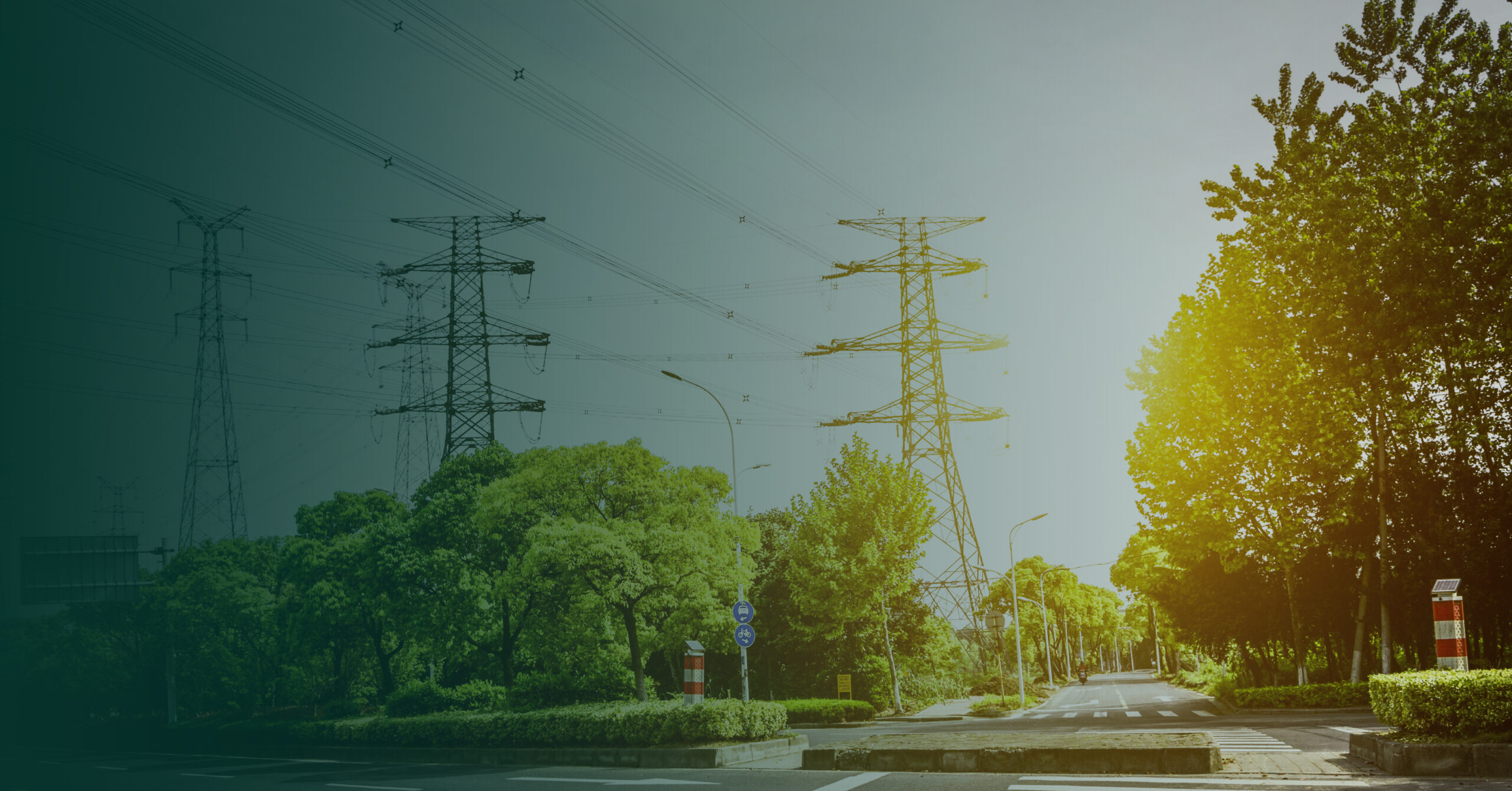
Every day, millions of Lagos residents and business owners make a quiet, expensive calculation: “how much fuel will the generator need today?” It is a calculation that no economy the size of Lagos should still be making. Lagos is Nigeria’s commercial capital, accounting for roughly 35% of national GDP, yet it runs on less than 8% of its own electricity needs. That gap between what the city produces and what its grid can deliver is the defining infrastructure contradiction of Africa’s second-largest city economy
Lagos generates a nominal gross domestic product (GDP) of approximately ₦54.77 trillion in 2024 and an estimated ₦66.47 trillion in 2025, accounting for roughly 35% of Nigeria’s total GDP (Lagos State Ministry of Planning & Budget [LSMEPB], 2025). Yet the economy runs on less than 1,000 MW of grid electricity against an estimated demand of 12,000 MW: a supply gap of more than 11,000 MW (LASERC, 2025)
This is not a temporary shortfall. It is the defining infrastructure constraint of Nigeria’s most economically important city.
The Hidden Parallel Economy
When grid electricity fails, which in Lagos is not an exception, an entire shadow energy economy absorbs the cost. An estimated 4.5 million generators operate across residential homes, market clusters, and micro, small, and medium enterprises (MSMEs) in Lagos State (Sustainable Energy for All [SEforALL] & Lagos State Government, 2024). Together, they consume approximately 16 billion litres of fuel annually, costing Lagosians around ₦14 trillion at the prevailing average price of ₦900 per litre (SEforALL & Lagos State Government, 2024).These generators also emit an estimated 38 million tonnes of CO₂ annually—a volume that exceeds the emissions of Togo, Rwanda, and Gabon combined (SEforALL & Lagos State Government, 2024).
The scale of this dependence is revealing. A joint diagnostic study by Sustainable Energy for All (SEforALL) and the Lagos State Government found that 72% of households in Lagos own at least one generator; 94% of small businesses depend on them; and 76% of market clusters cannot operate without self-generated power (SEforALL & Lagos State Government, 2024). Meanwhile, the African Development Bank’s African Economic Outlook 2026 found that power outages cost Nigerian firms the equivalent of 3% of annual sales: a silent drag on business profitability with no single invoice attached to it (AfDB, 2026).
At the industrial level, the Manufacturers Association of Nigeria (MAN) reported that Nigerian manufacturers spent ₦1.11 trillion on alternative energy sources in 2024 alone—a 42.3% increase from ₦781.68 billion in 2023 (MAN, 2025). This figure has since risen further to ₦1.34 trillion in 2025 (MAN, 2026). The World Bank estimates that unreliable electricity supply costs the Nigerian economy approximately $26.2 billion annually, equivalent to roughly 2% of Nigeria’s GDP (World Bank, 2021).
Put plainly: Lagos is not simply underserved by electricity, it has built an entire cost structure around its absence.
The Reform Architecture
The legal foundation for change came in June 2023, when President Tinubu signed the Electricity Act 2023, enabling states to establish and regulate their own electricity markets. Lagos moved decisively. Governor Babajide Sanwo-Olu signed the Lagos State Electricity Law 2024 on 3 December 2024, establishing the Lagos State Electricity Regulatory Commission (LASERC) as the sole regulator of the state’s electricity market, with authority over licensing, tariffs, market operations, and consumer protection (LASERC, 2025).
By July 2025, the Nigerian Electricity Regulatory Commission (NERC) had formally transferred all intrastate regulatory authority to Lagos State Electricity Regulatory Commission (LASERC), completing a transition that had previously been administered at the federal level. In March 2026, Governor Sanwo-Olu inaugurated the LASERC board, marking the full operational launch of the independent state electricity market (LASERC, 2026).
The reform introduces several structural mechanisms:
- Licensing of generation, distribution, and embedded power operators
- State-level tariff regulation under LASERC oversight
- A mandate to promote mini-grids and off-grid solutions
- Mandatory 100% metering across the state
- Establishment of a Lagos State Independent System Operator (LAISO) to manage grid operations
Existing distribution companies, Eko Electricity Distribution Company (EKEDC) and Ikeja Electric have been directed to incorporate Lagos-specific subsidiaries to align with the new framework (LASERC, 2026).
Closing an 11,000 MW Gap: What Is in the Pipeline?
The reform’s central challenge remains scaling. Closing a gap between 1,000 MW of supply and 12,000 MW of demand cannot be achieved by regulatory change alone. What has emerged, however, is a credible early pipeline.
At its maiden stakeholder engagement in May 2026, LASERC issued 14 electricity licenses covering off-grid generation, embedded generation, independent distribution, metering, and interconnected mini-grid operations (Channels Television, 2026). Approximately 40 additional projects are currently undergoing approval across the embedded generation, captive power, and mini-grid categories (Nigeria Housing Market, 2026).
In April 2026, Lagos signed Power Purchase Agreements (PPAs) with three independent power producers, targeting an increase in the state’s own generation capacity from under 60 MW to between 200–400 MW (MSME Africa, 2026). Shortly after, the Niger Delta Power Holding Company (NDPHC) announced plans to supply Lagos with an additional 1,500 MW, drawing from its approximately 2,000 MW of currently stranded generation capacity (The Guardian Nigeria, 2026; Punch, 2026).
LASERC’s broader roadmap targets a six-fold expansion in wheeling capacity, full 100% metering across the state, and the rollout of pilot 24/7 electricity franchise zones in two to three districts by October 2026 (Nairametrics, 2026; MSME Africa, 2026). By 2030, LASERC has set a target of 97.5% electricity availability across Lagos, alongside reducing system losses below 10% (LASERC, 2026; Business Post Nigeria, 2026).
Even under optimistic assumptions, these targets represent a long-term structural transition, not an immediate fix. The 12,000 MW gap will not close in a single licensing cycle.
Risks That Demand Honest Accounting
The reform’s ambition must be weighed against its tensions. The first is affordability. Nigeria’s implementation of a 300% tariff increases for Band A electricity consumers in 2024 exposed the fault line between cost-reflective pricing and consumer capacity. LASERC's own 2025 market report confirmed that IE Energy Lagos Limited; the Lagos-licensed successor to Ikeja Electric Plc achieved only 20% compliance with Band A service standards while billing at premium rates, creating a situation where businesses paid more and received less (The Guardian Nigeria, 2025).
The second is execution risk. LASERC is a newly constituted institution tasked with regulating one of Africa’s most complex energy markets. Its institutional capacity must match the scale of its mandate. International experience is instructive here. India’s Gujarat state, often cited as a benchmark for subnational electricity reform, moved from a peak power deficit of roughly 25% in the early 2000s to near-zero shortages through sustained regulatory discipline, feeder separation, and consistent investment (International Energy Agency, 2022). The lesson is not simply that reform is possible, but that it requires institutional consistency over years, not months.
The third is regulatory complexity. Businesses operating across state lines must now navigate both LASERC’s framework and the federal NERC regime, a dual compliance environment that increases operational costs and may, if poorly managed, slow cross-state investment in energy infrastructure (Templars Law, 2025). Lagos is not acting alone: several other Nigerian states, including Enugu, Ondo, and Ekiti, have enacted their own electricity laws, raising the prospect of a fragmented national regulatory landscape.
What This Reform Is Really About
Lagos is not simply fixing electricity. It is attempting to replace one of the largest informal cost structures in Africa with a regulated, competitive market. The ₦14 trillion expense that Lagos residents and businesses currently spend annually to fuel their own generators is not just a financial burden, it is a measure of the distance between the city’s economic ambitions and its infrastructure reality.
The reform’s consequences, if it succeeds, will be felt differently across three groups. For the Lagos State Government, success means expanded fiscal capacity: LASERC licensing revenues, a broader tax base from productive businesses, and reduced fiscal drag from power sector subsidies. For grid-reliant firms (manufacturers, data centers, hospitals, and cold-chain operators) reliable electricity could materially reduce production costs, stabilize output, and improve competitiveness in regional and export markets. The ₦1.34 trillion manufacturers spent on self-generation in 2025 alone represents recoverable cost savings if grid reliability delivers on its promise. For households, the most direct benefit would be a reduction in the daily fuel expenditure that quietly consumes a disproportionate share of low and middle-income budgets.
But the reform also creates a clear risk of losers in the near term. Low-income households face the greatest vulnerability: tariff increases that precede reliability improvements will erode purchasing power for those least able to absorb higher energy bills. SMEs with thin margins (market traders, small manufacturers, informal service providers) face a difficult transition period in which they pay more for electricity without yet enjoying the productivity gains that reform promises. The experience of the 2024 Band A tariff hike, where customers paid premium rates for sub-standard service, is precisely the scenario that LASERC must not repeat at scale.
The structural bet Lagos has made is this: that building a state-level electricity market is not only constitutionally viable and economically rational, but that it can be executed with the institutional discipline and investment mobilization the challenge demands. The pipeline is real, the framework is in place, and the regulator is operational. Whether Lagos can close an 11,000 MW gap is, ultimately, a test of African sub-national governance at scale; one that the continent is watching.
Get the next insight early.
Receive LEAF research, market notes, article drops, and report releases in your inbox.
US-Iran Peace Deal: Africa’s Economic Test
The U.S.-Iran peace framework matters for Africa not because it resolves the continent’s structural vulnerabilities, but because it temporarily reprices several global risks to which African economies are…
Continue reading
Share a market signal, question, or useful perspective. You can respond to the article as a whole, or use the "Discuss this section" buttons beside key points to add context.
The discussion space is open. Add a clear observation, a question worth exploring, or a field signal that could help other readers think more sharply.